Living Danish heritage

THE DANISH
SPITZ

An old Danish breed with a bright spirit, a loyal heart and a story worth preserving.

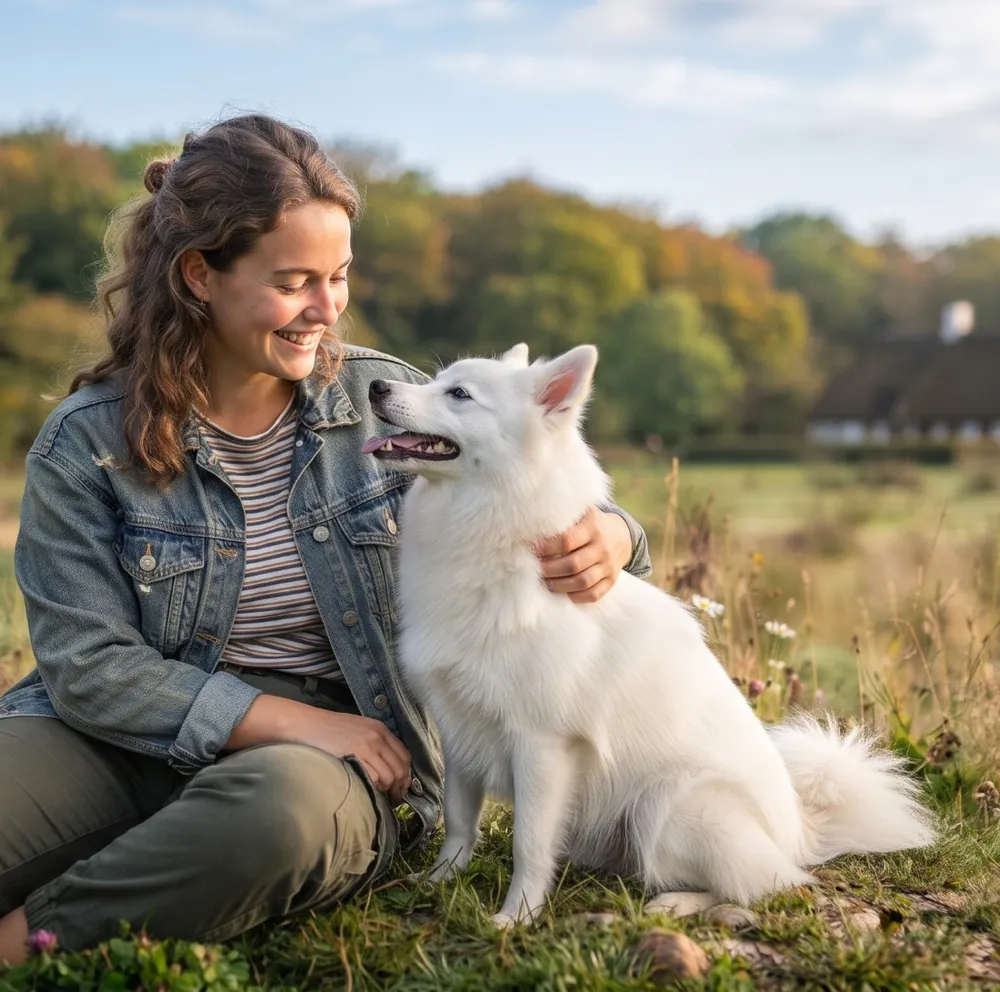
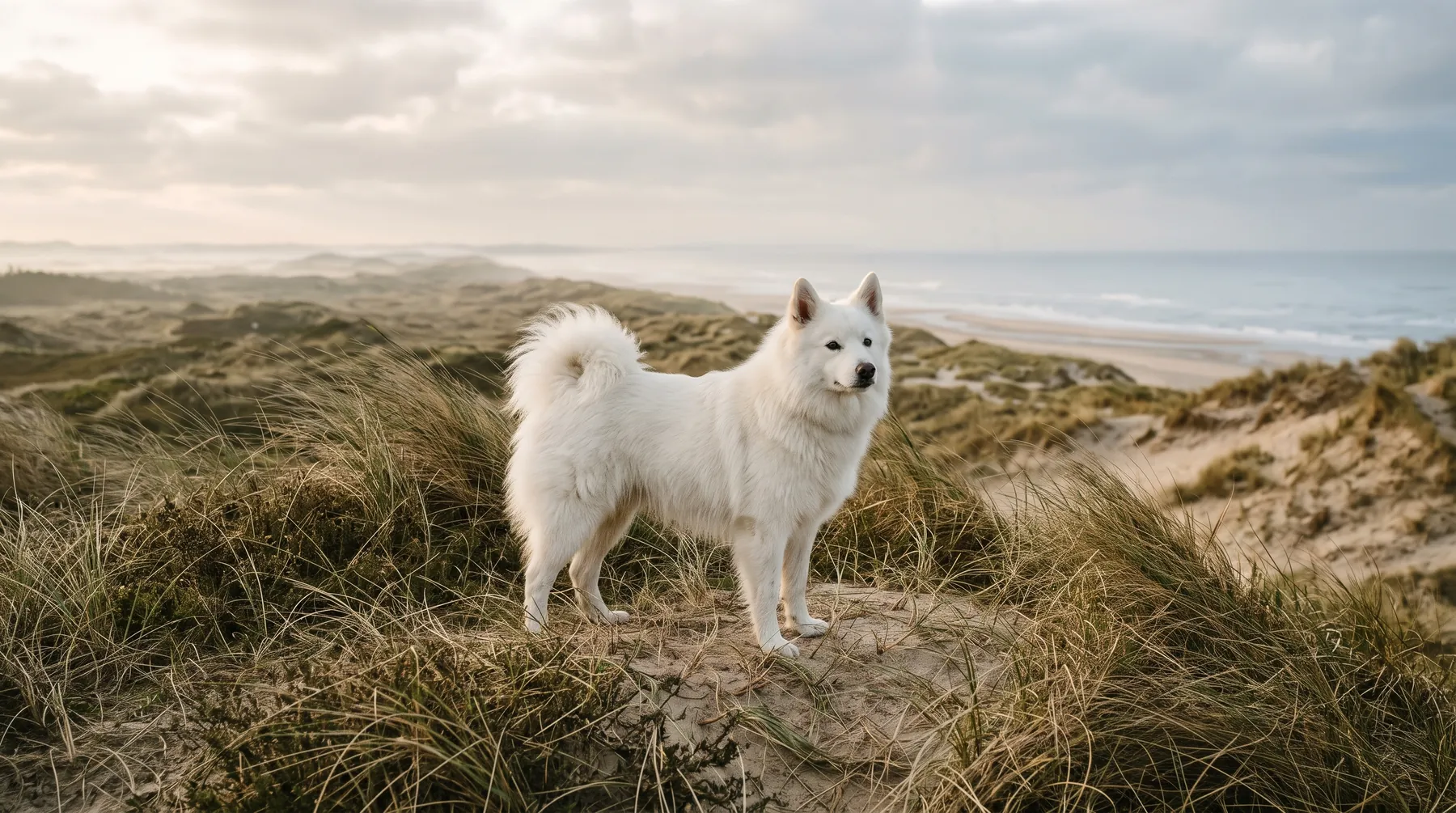
White Danish Spitz in the marram grass on the Danish coastal dunes by the sea

Recognised by DKK & NKU · not yet FCI-recognised

Meet the breed

Denmark’s Bright-Spirited Companion

Known at home as Dansk Spids, this medium-small Nordic spitz is elegant yet sturdy: lively, friendly, curious and brave, with large pointed ears and a curled tail.

Origin — Denmark
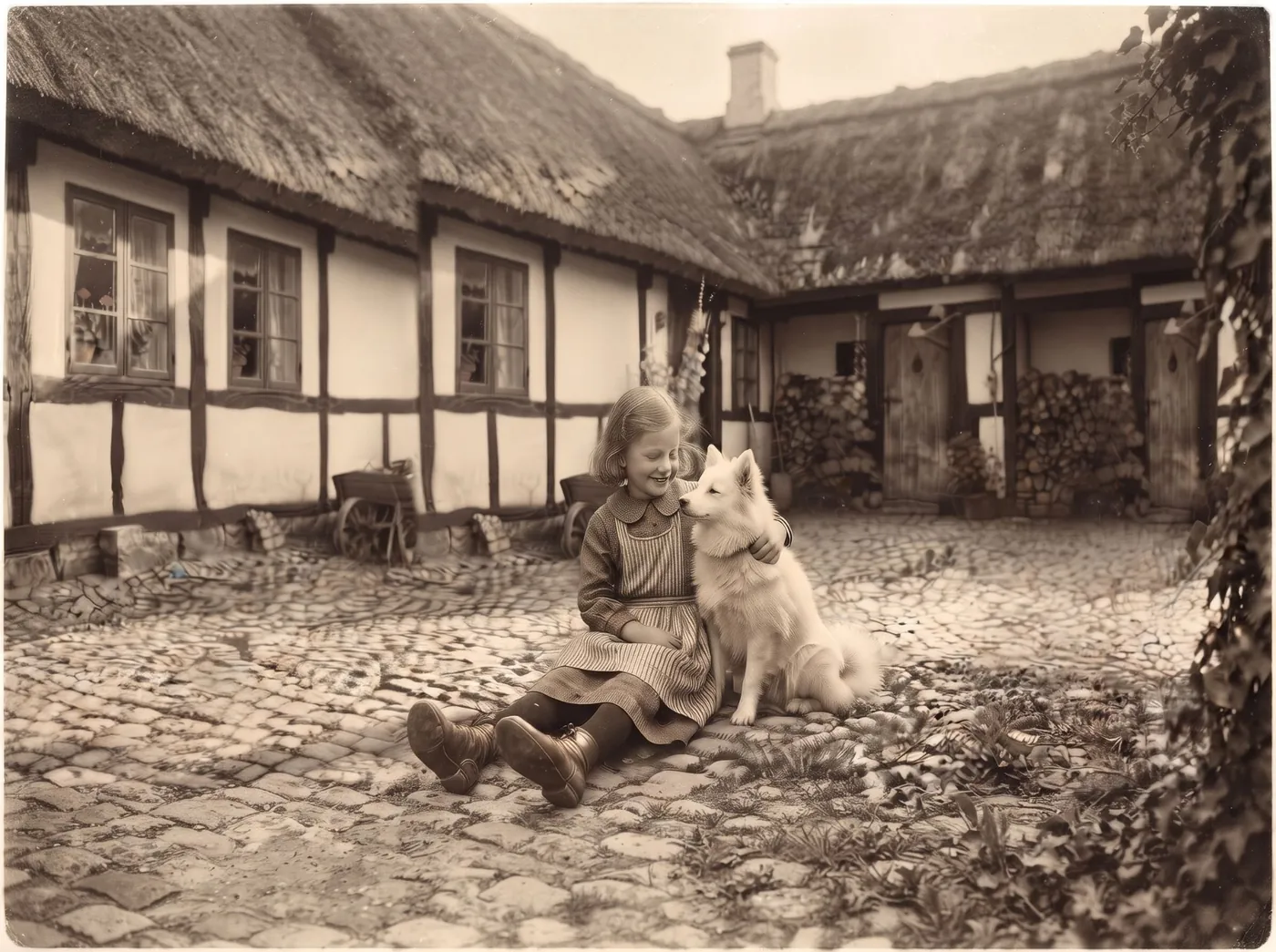
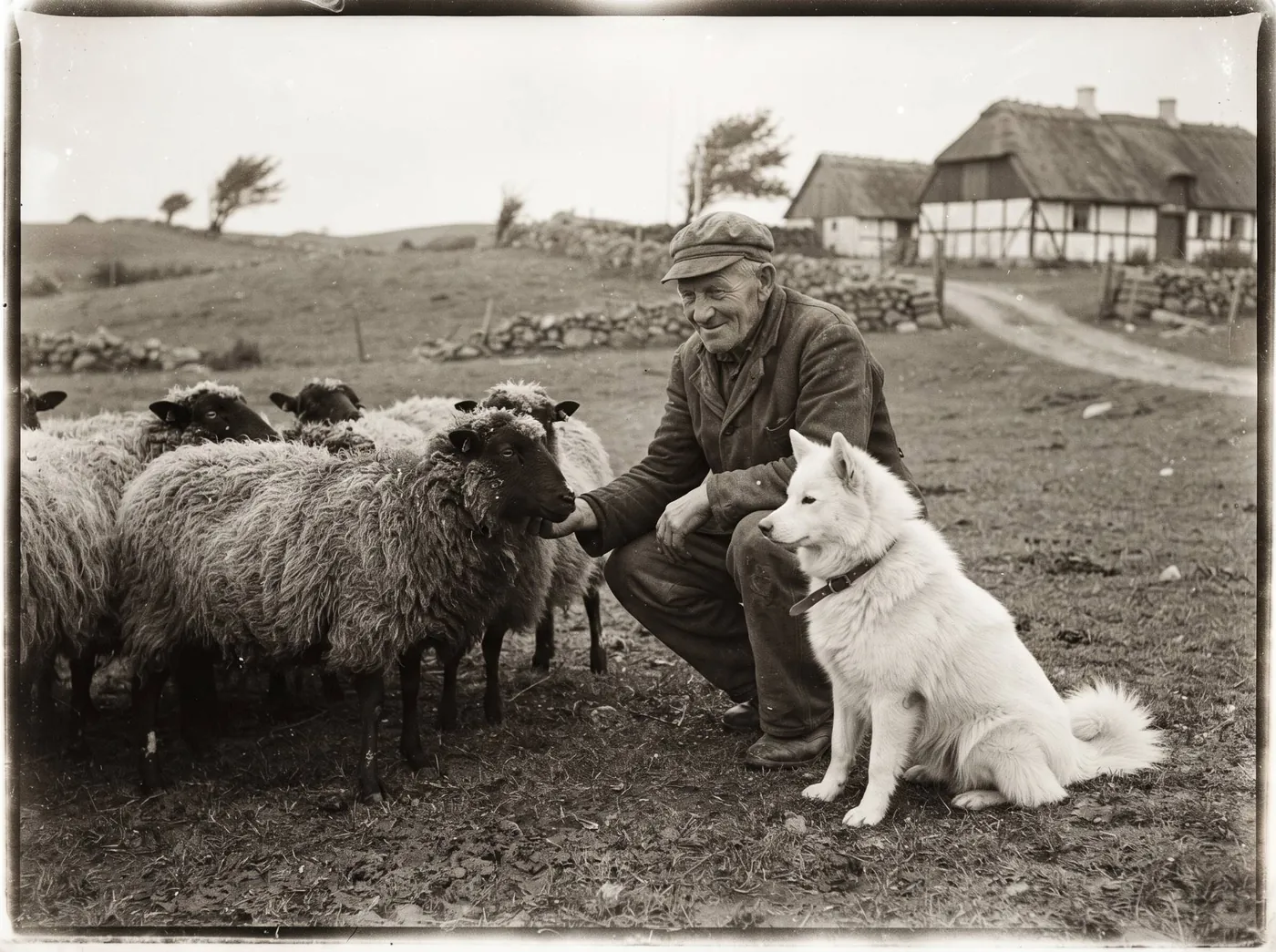
Illustration in an old photo style of a Danish Spitz beside a farmer and his sheep in front of a thatched farmhouseFarm & town roots

A common sight in the Danish countryside, especially in Jutland, where it was loved as a watchful farm dog and a gentle playmate for children.

A breed with many namesOver the years it has been called hvid spids (white spitz), ulvespids (wolf spitz), grønlænderspids (Greenland spitz) and samojedespids (Samoyed spitz). All those names made the breed hard to keep track of.
Breed type — Nordic SpitzGroup 5
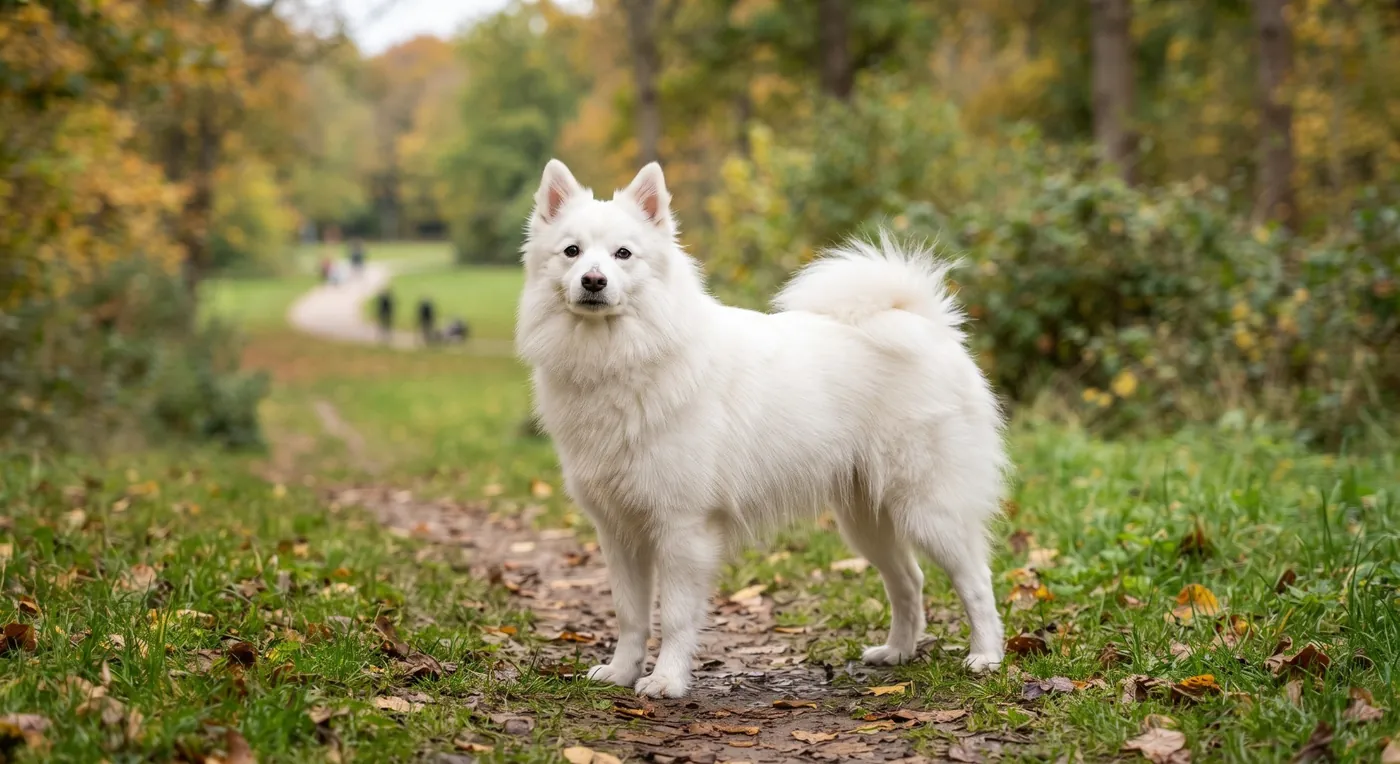
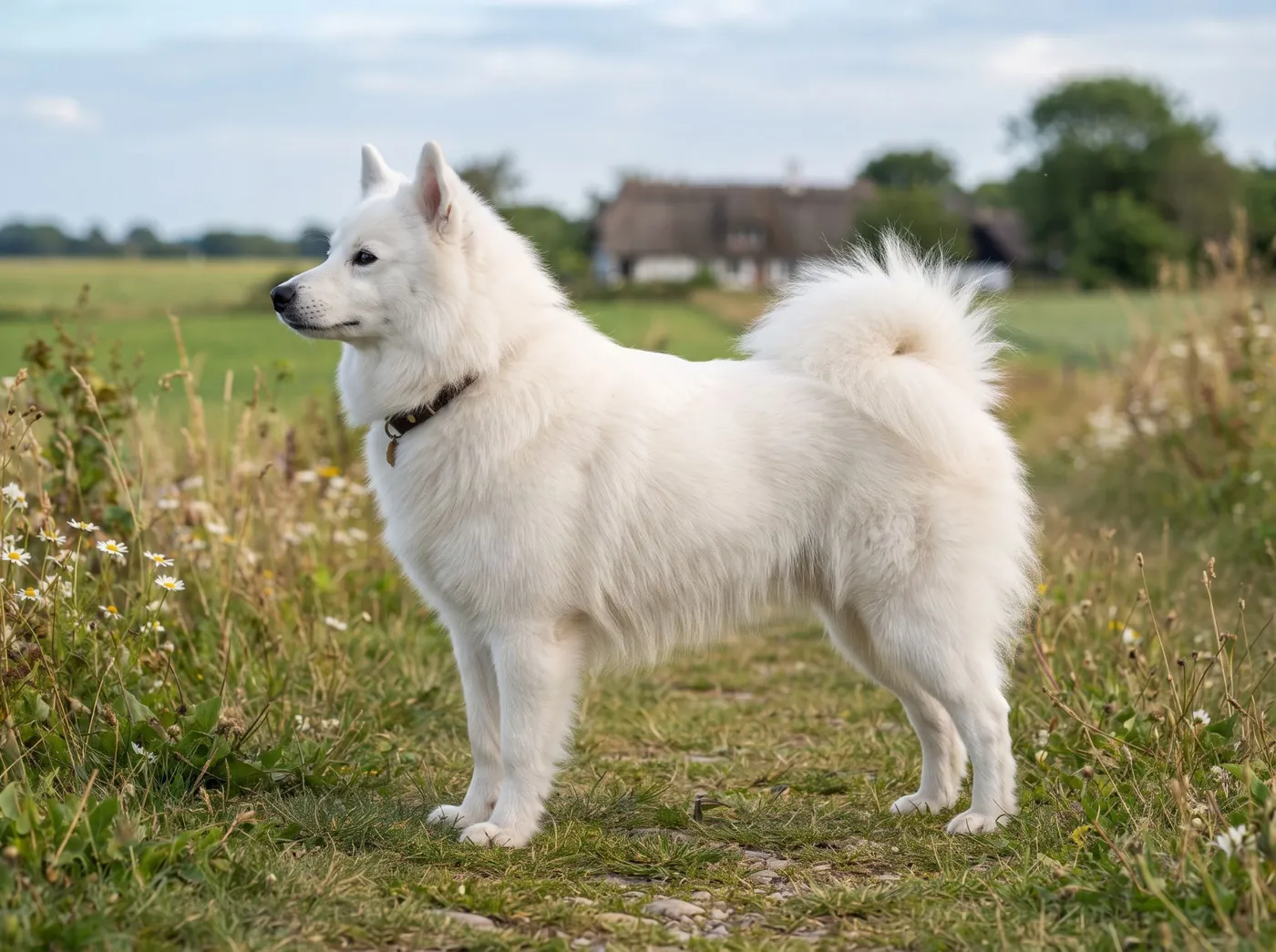
Side view of a Danish Spitz on a field path with a thatched farmhouse behindDKK & NKU recognised

Placed by the Nordic Kennel Union in Group 5 (Spitz and primitive types). Unlike many spitz breeds, it has a very contained hunting drive and likes to stay close to home and family.

Recognition statusThe breed is managed by Dansk Kennel Klub and recognised by the Nordic Kennel Union (NKU), so it can be shown in the Nordic countries. It is not recognised by the international FCI, and the population is still being rebuilt.
KEY STATS
Height at withers43 – 49 cm
35 cm▮ ideal 46 cm52 cm
Typical weight12 – 18 kg

Same range for males and females. The DKK standard itself gives no weight.

Accepted colours
Off-whiteBiscuit

A delicate pink tone is allowed. The coat must never look light brown.

The official look

Interactive Breed Standard

Click a point on the dog to see what the Dansk Kennel Klub standard asks for, and what it means in plain English.

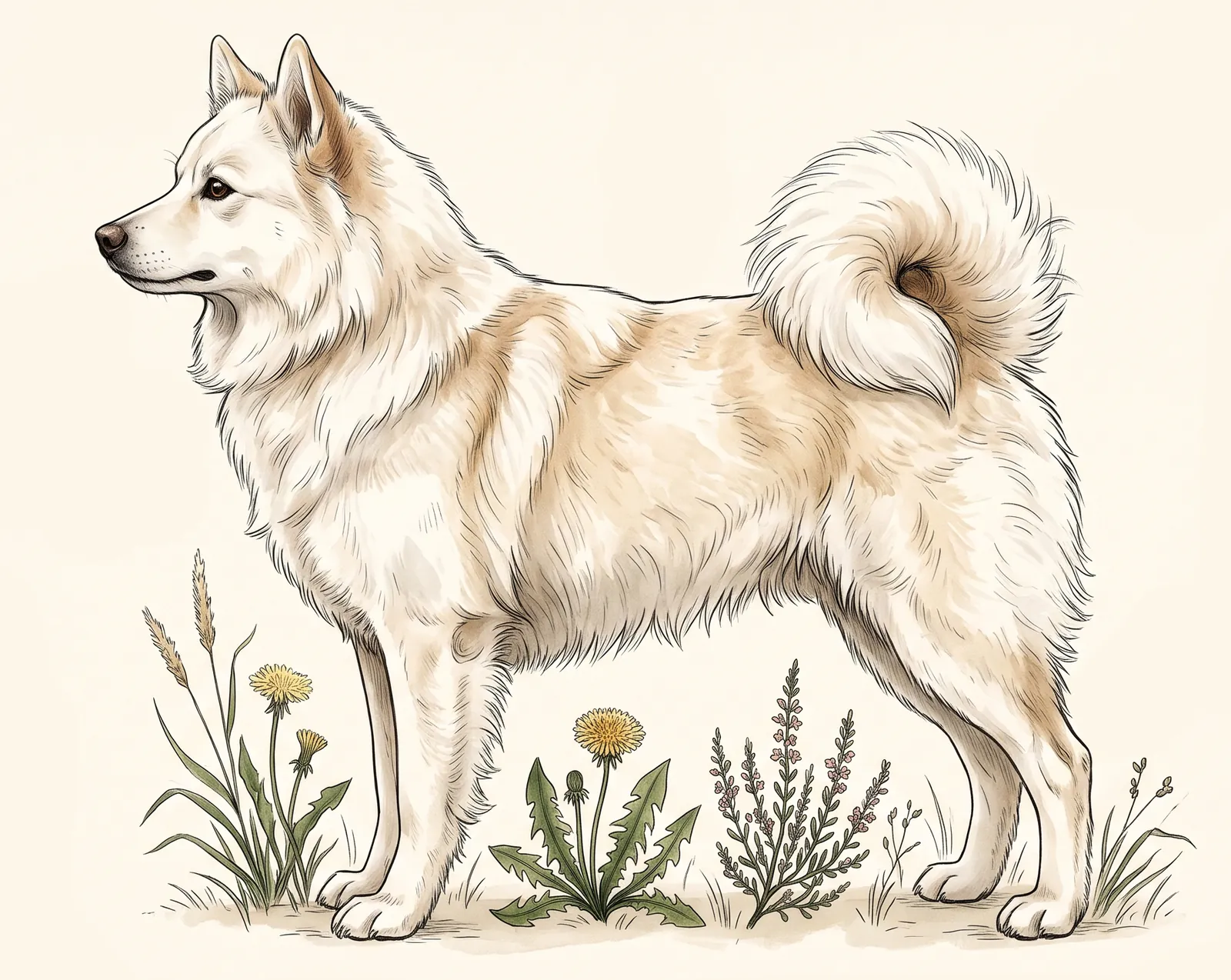
Side-view botanical illustration of a Danish Spitz standing among wildflowers

Click a ring on the dog to read about that part of the body.

OVERVIEW

The Whole Dog

Medium-small, elegant yet sturdy

What the DKK standard says

A medium-small spitz, elegant but sturdily built, with large pointed ears. The body is slightly longer than the height at the withers. Males and females should be clearly different. Temperament: lively, friendly, curious and brave, an excellent watchdog without a strong hunting drive. Gait: effortless, efficient and very enduring.

In plain English

A light, balanced, all-day dog: never heavy or exaggerated. Males measure 43–49 cm (ideal 46 cm) and females 39–46 cm (ideal 41 cm).

Summarised from the DKK breed standard for the Danish Spitz (September 2022). The wording here is a summary, not the official text.

A Danish heritage

From Farmyard to Near Extinction and Back

Five chapters in the story of the Danish Spitz.

A Companion of Danish FamiliesGenerations past
Farms in Jutland, homes in town

A Companion of Danish Families

White spitz-type dogs have lived in Denmark for generations. In the countryside, especially in Jutland, the breed watched over farmyards and played with the children, earning the nickname “children’s dog”. In the towns it was kept by merchants and better-off families.

It went by many names: hvid spids, ulvespids, grønlænderspids and samojedespids. That made the breed hard to keep track of.
Chapter 1 of 5

The images in the history section are illustrations, not historical photographs.

Temperament & personality

Warm-Hearted, Attentive & Cheerful

Choose a trait to see what it means in everyday life.

Personality: DEVOTED

A close, heartfelt connection with its family

The Danish Spitz is loving and devoted. It thrives on close contact with its people and wants to be part of everyday family life.

What this means in daily life

  • Bonds with the whole family, not just one person.
  • Tends to stay close to home and family on walks.
  • Not suited to being left alone for long days on a regular basis.
Danish Spitz: devoted
Practical guide

Life with a Danish Spitz

Exercise, training, grooming and family life: what everyday care looks like.

Active but not demanding

Daily Walks & Meaningful Activity

The Danish Spitz enjoys exercise and having something meaningful to do, but it is not an especially demanding breed. Daily walks and play suit it well.

Stays closeIts hunting drive is very contained, and it is unlikely to stray far from its family. Good recall training is still a must.
Built to keep goingThe standard describes its gait as effortless, efficient and very enduring.
All-weather coatThe thick undercoat protects well in all kinds of weather.
Daily Walks & Meaningful Activity
ExerciseModerate
Hunting driveLow
SizeMedium-small
A quick reflection

Is the Danish Spitz Right for You?

Answer five quick questions about your household. It is not a test, just a way to think it through.

01

Are you looking for a closely bonded family dog that wants to be part of your daily life?

The Danish Spitz thrives on close contact with its family.

02

Do you enjoy daily walks, time outdoors and some light training or games?

It enjoys exercise and meaningful activity, but is not an especially demanding breed.

03

Are you happy to brush a double coat weekly and handle extra shedding in spring and autumn?

Weekly brushing is enough most of the year, but there will be white hair.

04

Can you live with a watchful dog that may bark when someone comes to the door?

As an old farm watchdog it is alert and somewhat prone to barking. Kind training helps.

05

Will the dog usually have company, rather than being alone for long days?

A people-oriented breed is happiest when it is part of daily family life.

Answer all 5 questions

You have answered 0 of 5 questions so far.

0 / 5 answered
Questions & answers

What people often ask

Short answers to the questions that come up most about the Danish Spitz.

Does the Danish Spitz shed a lot?

It has a dense double coat, and shedding increases in spring and autumn. The rest of the year a thorough weekly brush is usually enough, and two or three baths a year will do. There will be white hairs, but the coat is easier to care for than it looks.

Is the Danish Spitz good with children?

Yes. It was once known as the “children’s dog” because it is a devoted, enthusiastic playmate. As with any dog, children should learn to treat it with respect.

Can a Danish Spitz be left home alone?

For a few hours, if it is used to it gradually. The breed is very people-oriented and is not a good fit for a home where it would often be alone for long days.

How much exercise does a Danish Spitz need?

A moderate amount. Daily walks, play and some training suit it well. Its hunting instinct is very low and it likes to stay close to its family, but a reliable recall is still a must.

Does the Danish Spitz bark a lot?

It is alert and somewhat inclined to bark when someone arrives, as an old farm dog should be. Kind, early training, such as a calm “thanks, that’s enough” cue, keeps the barking at a sensible level.

How big does a Danish Spitz get?

It is a medium-small dog. According to the DKK standard, height at the withers is 43–49 cm for males and 39–46 cm for females. The standard gives no weight, but most typically weigh 12–18 kg.

What colours does the Danish Spitz come in?

Off-white and biscuit. A faint pinkish tinge is allowed, but the coat must never look light brown.

Is the Danish Spitz the same as a Samoyed or Japanese Spitz?

No. The Danish Spitz is a separate, old Danish breed. It has been called names such as “Samoyed spitz” and “Greenland spitz”, but those are old nicknames, not a sign that it is the same breed.

Is the Danish Spitz a recognised breed?

Yes. The breed is managed by the Danish Kennel Club (DKK) and recognised by the Nordic Kennel Union (NKU), so it can be shown in the Nordic countries. It is not yet recognised by the international FCI.

Where can I find a puppy?

Start with the Danish Kennel Club. DKK’s puppy site Købhund.dk (in Danish) lists puppies and breeders, and the breed club Selskabet for Dansk Spids keeps its own list of breeders (in Danish). The population is small, so be prepared for a wait. Ask the breeder about DKK registration and about health and temperament in both parents.

Safeguarding the future

A BREED WORTH KNOWING.
A HERITAGE WORTH PRESERVING.

The Danish Spitz is still a small breed, found mainly in Denmark. Since 1988, Dansk Kennel Klub has worked to gather and register dogs of the old type, and today every healthy, typical litter helps secure its future.

Small Gene Pool

The breed was rebuilt from a limited number of dogs, so genetic diversity matters in every breeding decision.

Healthy & Typical

The standard says only healthy dogs with typical build and temperament should be used for breeding.

Still Growing

The breed is recognised in the Nordic countries but not yet by the FCI internationally.

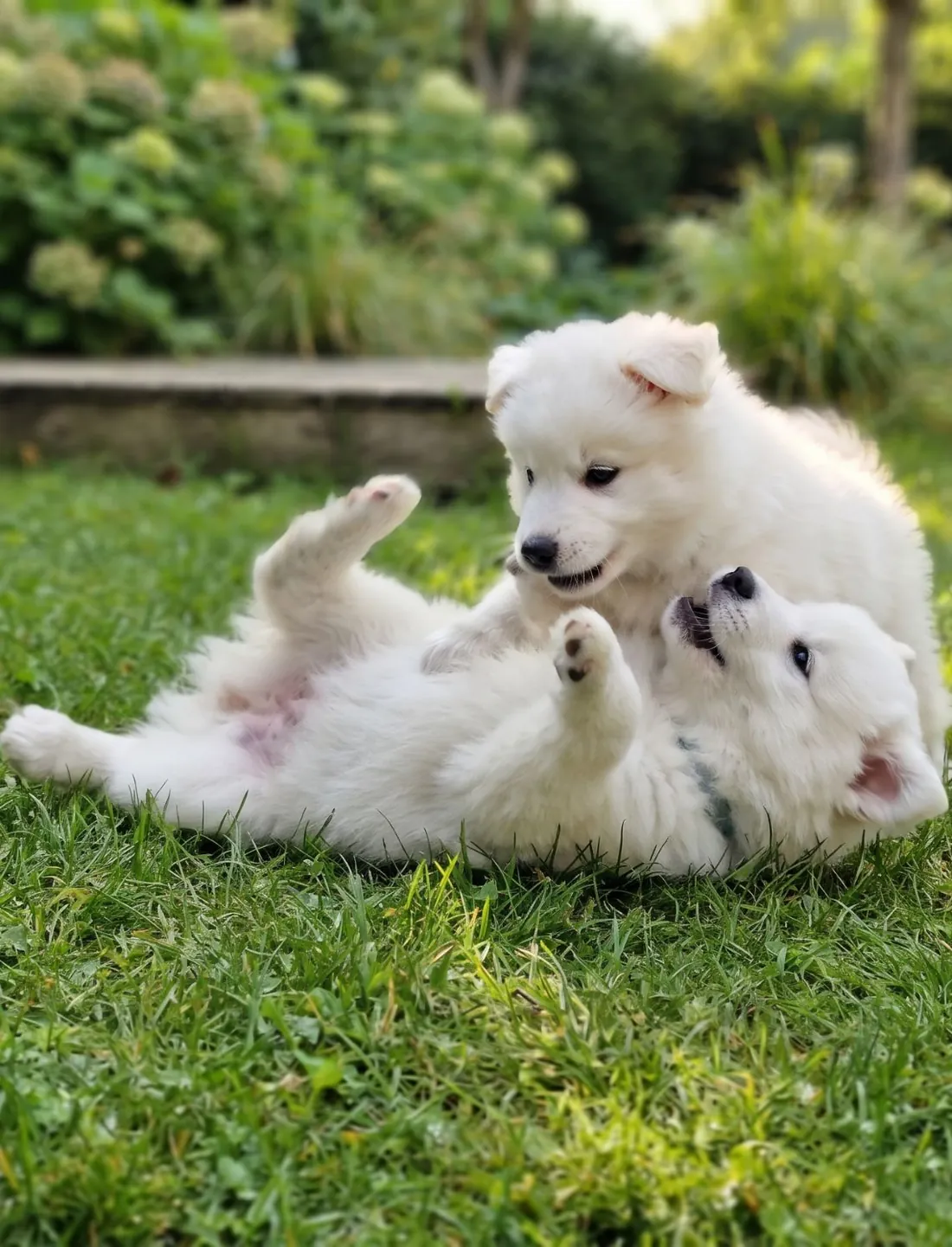
Two white Danish Spitz puppies playing in the grass
Thinking of a puppy?Start with Dansk Kennel KlubAsk breeders about DKK registration and the health and temperament of both parents.Købhund.dk Breeder list Both in Danish

In English from the breed club: Breed Standard Breed Compendium (PDF)